


From Heritage to Handbag: Emirati Women’s Day and the Craft Behind Modern Leather Design
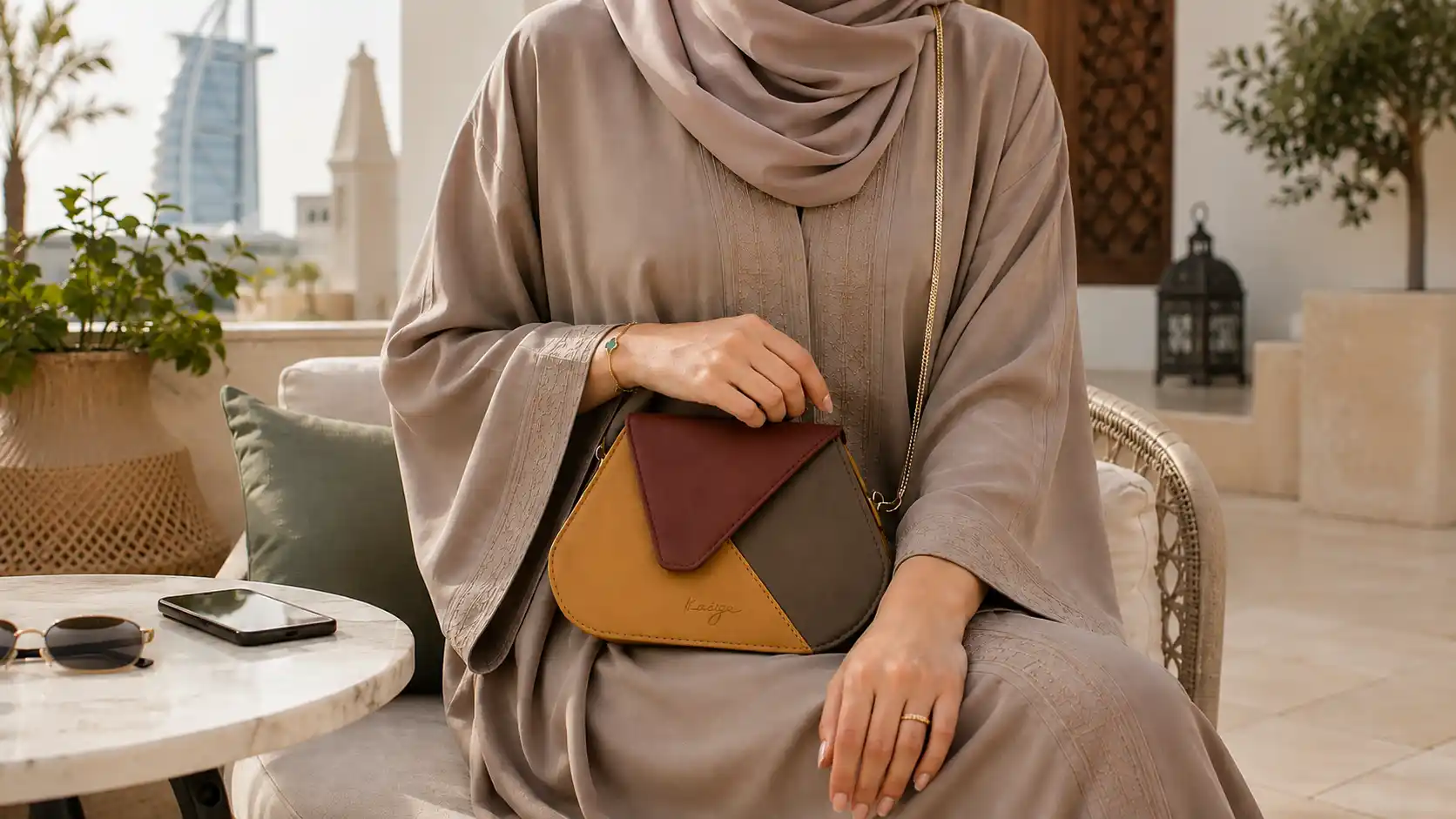
Long before “handcrafted” became a word brands put on a swing tag, it was simply how things were made in the Emirates. Sadu weaving, Talli embroidery, palm-frond basketry — these weren’t decorative traditions. They were skills passed from mother to daughter, refined over generations, and largely kept alive by the patient, exacting work of Emirati women. Emirati Women’s Day, marked this year across the full month of August 28 to September 28, is as good a moment as any to trace a line between that heritage and the leather goods being made in workshops across the UAE today. It’s not a straight line, and it isn’t meant to be a marketing shortcut. But the connection is real, and it’s worth understanding properly — both for what it says about the country’s design history, and for what it should mean for how leather craftsmanship gets talked about going forward.
The Women Who Kept Craft Alive
Sadu weaving is probably the clearest example. Traditionally practiced by Bedouin women using wool from sheep, goats, and camels, it produced the geometric-patterned textiles used for tents, rugs, and cushions across the desert regions of the UAE. The weaving itself was slow, done on a ground loom, and required a working knowledge of pattern and structure that took years to develop properly. It wasn’t a hobby craft — it was infrastructure. The tents families lived in depended on it. Talli embroidery followed a similar path. A technique using metallic thread braided into intricate borders for traditional garments, it demanded precision that’s genuinely difficult to replicate by machine even today. Both crafts were sustained almost entirely through informal, generational teaching — a grandmother showing a granddaughter, not a classroom or a manual. This is part of why the founding of the General Women’s Union in 1975, by Her Highness Sheikha Fatima bint Mubarak, mattered so directly to craft preservation. Alongside its work on education and representation, the Union played a real role in formalizing support for traditional handicrafts at a moment when rapid modernization could easily have let them fade out within a generation or two. Heritage centers and handicraft initiatives that trace back to that era exist specifically because someone recognized these skills were worth protecting deliberately, not left to survive on their own. That history is the actual reason Emirati Women’s Day and craft heritage sit so close together. It isn’t a stretch to connect them — the connection was built into the occasion from the start.
What Traditional Craft and Leatherwork Actually Have in Common
It would be easy to overstate this connection, so it’s worth being specific about where it genuinely holds. Hand skill that resists shortcuts. Sadu weaving can’t be rushed without the pattern falling apart. Full-grain leather stitched by hand carries the same constraint — machine stitching can be faster, but it can’t replicate the control a skilled hand has over tension, spacing, and how a seam sits against a curved edge. Both crafts reward patience in a way that’s increasingly rare in how things get made. Materials that respond to skill rather than mask its absence. Sadu weaving works with raw wool, not a synthetic substitute that hides inconsistency. Vegetable-tanned, full-grain leather works the same way — it shows exactly how well or poorly it’s been handled, unlike coated or corrected leathers that can disguise a rushed process underneath a uniform finish. Design language rooted in restraint. Traditional Emirati weaving leans on geometric repetition and a limited, deliberate palette rather than ornamentation for its own sake. That same restraint shows up in well-designed leather goods — the best pieces tend to let material and construction carry the design, rather than leaning on excessive hardware or decoration to do the work. Knowledge that has to be passed on directly. Neither skill survives well through documentation alone. Sadu weaving techniques and fine leatherwork are both still primarily taught hands-on, artisan to apprentice, which is part of why both remain comparatively rare skills even now. None of this means a leather tote is a Sadu textile with different materials. It means both crafts sit inside the same broader tradition of skilled, patient, material-respecting handwork — a tradition the UAE has actively worked to keep visible rather than let disappear quietly.
From Loom to Leather: Where the Influence Actually Shows Up
In practical terms, this heritage shows up less as literal pattern-copying and more as an approach to how a piece gets made. Vegetable tanning, the process used across full-grain leather goods, mirrors the same principle Sadu weaving relies on — working with natural material through slow, deliberate processing rather than fast chemical shortcuts. The tanning takes longer. It costs more. It also produces leather that ages the way naturally processed wool does: gaining character over years rather than degrading. Hand-finished edges and reinforced hand-stitching on structured bags echo the same standard Talli embroiderers held themselves to — visible, deliberate handwork rather than a seam designed to disappear. On a well-made tote, the stitching isn’t hidden; it’s part of what you’re looking at. Even the emphasis on personalization — an embossed monogram, initials worked into a strap — has a quiet parallel in how traditional textiles were historically marked or adapted for the specific household they were made for, rather than produced identically at scale.
Honoring the Connection During Emirati Women’s Day
For a business built around handcrafted leather, Emirati Women’s Day is less an occasion to run a promotion and more a moment to be explicit about a debt that’s usually left implicit — that the standards modern leather craftsmanship holds itself to have real roots in traditions largely carried forward by Emirati women, often without much public recognition at the time. Kaizer’s Women’s Collection reflects this directly in its design approach — structured, restrained pieces that let material and construction lead, rather than crowding the design with unnecessary detail. And for anyone curious about how that construction actually happens, the Patina Service offers a close look at how deliberately-processed leather is designed to age — the same principle of “slow now, better later” that runs through Sadu weaving and vegetable tanning alike. More on the story behind how these pieces come together, including the workshop process itself, is on our About Us page.
Where to See the Craft in Motion
Text can only carry a story about handwork so far — some of this is genuinely better watched than described. The full stitching and tanning process, start to finish, is documented on our YouTube channel, for anyone who wants to see what “hand-finished” actually looks like in practice rather than take the phrase on faith. For more regular, behind-the-scenes glimpses of the workshop — including pieces in progress and the artisans doing the actual work — our Instagram is updated far more often than this blog. And for craftsmanship features, company updates, and a closer look at the people behind the work, our LinkedIn page is where we post more of the story than fits neatly into a product page.
A Legacy Worth Carrying Forward
Emirati Women’s Day isn’t really about handbags, and it would be a stretch to pretend otherwise. But it is, in part, about recognizing skill that was carried forward quietly, generation after generation, often without the credit it deserved at the time. Leatherwork sits inside a different tradition than Sadu weaving or Talli embroidery, but it answers to the same standard — patience over shortcuts, material honesty over disguise, and a respect for handwork that machines still can’t fully replicate. That’s worth saying plainly, not just implying through a well-lit product photo.
Frequently Asked Questions
What is Emirati Women’s Day? Emirati Women’s Day is a UAE national observance held annually on August 28, established in 2015 to honor the achievements and contributions of Emirati women. In 2026, it has expanded into a month-long celebration running through September 28, under the theme “Together, We Rise Stronger and Better.” What traditional crafts are most associated with Emirati women’s heritage? Sadu weaving and Talli embroidery are two of the most well-known, alongside palm-frond basketry. Both were traditionally taught and practiced by women, passed down through generations rather than through formal instruction. What is Sadu weaving? Sadu weaving is a traditional Bedouin textile craft using wool from sheep, goats, and camels, woven on a ground loom into geometric-patterned fabric historically used for tents, rugs, and cushions. What is Talli embroidery? Talli is a traditional embroidery technique using metallic thread braided into fine, intricate borders for garments, historically requiring years of hand skill to master. How does traditional Emirati craft influence modern leather design? The influence shows up in approach rather than literal pattern: slow, deliberate material processing, visible hand-stitching rather than machine-hidden seams, and restrained, material-led design rather than heavy ornamentation — principles shared between traditional weaving and full-grain leatherwork. Why is vegetable-tanned leather compared to traditional weaving techniques? Both rely on slow, natural processing rather than fast synthetic shortcuts, and both produce material that gains character over time — aged wool and patinated leather age similarly rather than simply wearing out. Where can I see the leather craftsmanship process in person or online? The full tanning and stitching process is documented on Kaizer’s YouTube channel, with more frequent behind-the-scenes updates from the workshop on Instagram and LinkedIn. Is Emirati Women’s Day a public holiday? No, it is not an official public holiday, but it is widely observed across UAE businesses, government institutions, and communities through recognition events, heritage initiatives, and appreciation campaigns.